Great Romantic Relationship Causal Model
- id: 1770048125
- Date: Feb. 2, 2026, 11:48 p.m.
- Author: Donald F. Elger
Causal Models
A causal model explains how one or more factors, called drivers, produce a result. The drivers are the causes of the result.
A causal model answers the question:
What must be in place, and what must be done, for a particular result to
occur?
In this sense, a causal model functions as a recipe for producing a
result.
When the drivers are understood and applied correctly, the result
reliably follows.
A causal model of romantic relationships identifies the drivers that, together, produce a great romantic relationship.
Great Romantic Relationship Causal Model (Summary)
A great romantic relationship is produced when both people agree to pursue the gold together, are self-aware of their needs, make respectful requests, and respond kindly to their partner’s requests, creating a balance where both people regularly get what they want.
Here are several diagrams that illustrate how the drivers work together to produce the gold which is a great romantic relationships.
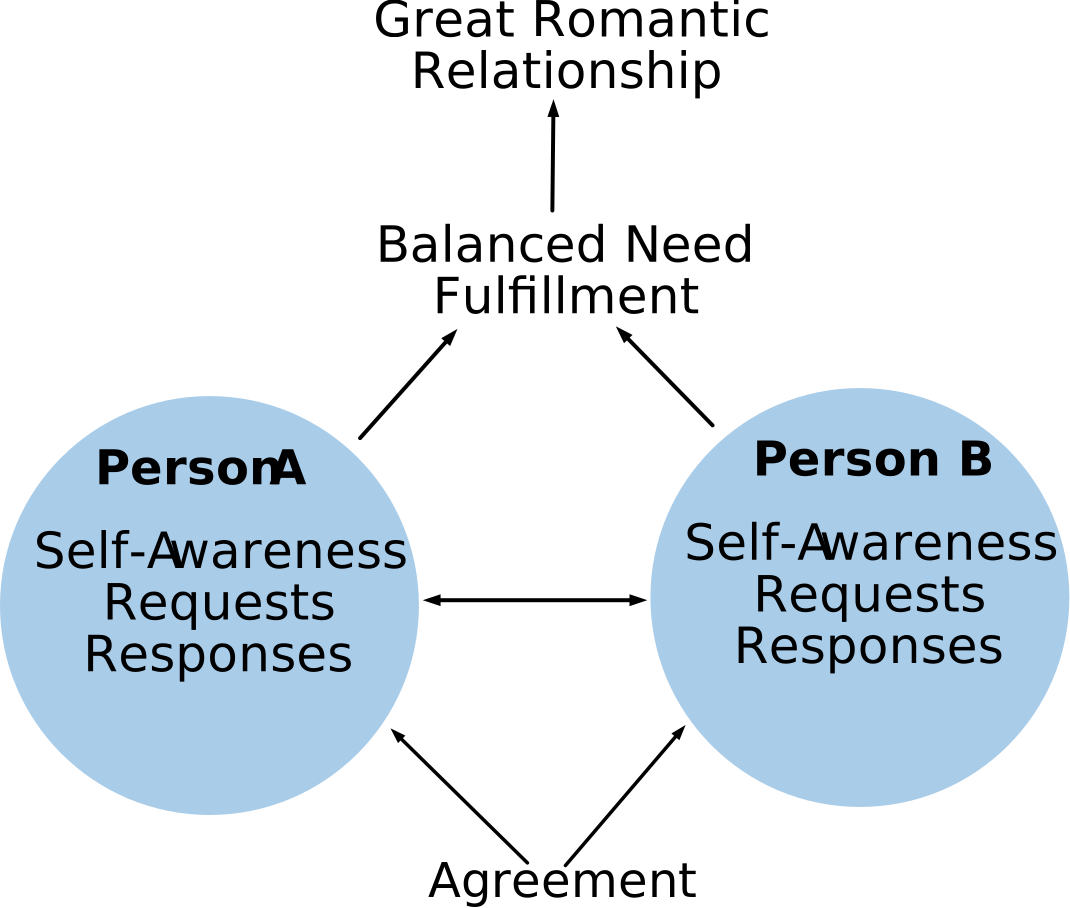
Agreement → Person-A-SelfAware-Responding-Requesting + Person-B-SelfAware-Responding-Requesting → Balance → Great Romantic Relationship
Gold
- Both people feel great together
- Romance is present and sustained over time
Drivers
- Agreement
- Agreement to pursue the gold together
- Agreement that the gold is what both people want
- Agreement to be self-accountable for needs, requests, and responses
- Person A Self-Aware, Requesting, Responding
- Know what you want from the relationship
- Communicate what you want
- Make requests respectfully
- Requests are framed as bids, not demands or attacks
- Respond kindly when Person B makes reasonable requests
- Kind responses reinforce openness and trust
- Do not punish Person B for asserting needs
- No complaining, fighting back, or withdrawal in response to healthy self-advocacy
- Ensure that you sometimes get what you want
- Actively listen to what Person B wants
- Ensure that Person B sometimes gets what they want
- Strive for balance between what you get and what Person B gets
- Person B Self-Aware, Requesting, Responding
- Know what you want from the relationship
- Communicate what you want
- Make requests respectfully
- Requests are framed as bids, not demands or attacks
- Respond kindly when Person A makes reasonable requests
- Kind responses reinforce openness and trust
- Do not punish Person A for asserting needs
- No complaining, fighting back, or withdrawal in response to healthy self-advocacy
- Ensure that you sometimes get what you want
- Actively listen to what Person A wants
- Ensure that Person A sometimes gets what they want
- Strive for balance between what you get and what Person A gets
Causal Logic
- Requests made respectfully invite cooperation
- Kind responses reinforce future honesty and openness
- Punishing self-advocacy trains silence and resentment
- Safety in asking enables accurate communication of needs
- Accurate communication enables balanced need fulfillment
- Together these drivers produce trust, positive affect, and sustained romance
Success Criteria
- Explain, in your own words, the causal model for great romantic relationships, including the gold and the main drivers
- Articulate what you want out of a romantic relationship in ways that meet the standards embedded in the drivers
- Ask for what you want in ways that meet the standards embedded in the drivers
- Respond to your partner’s requests in ways that meet the standards embedded in the drivers